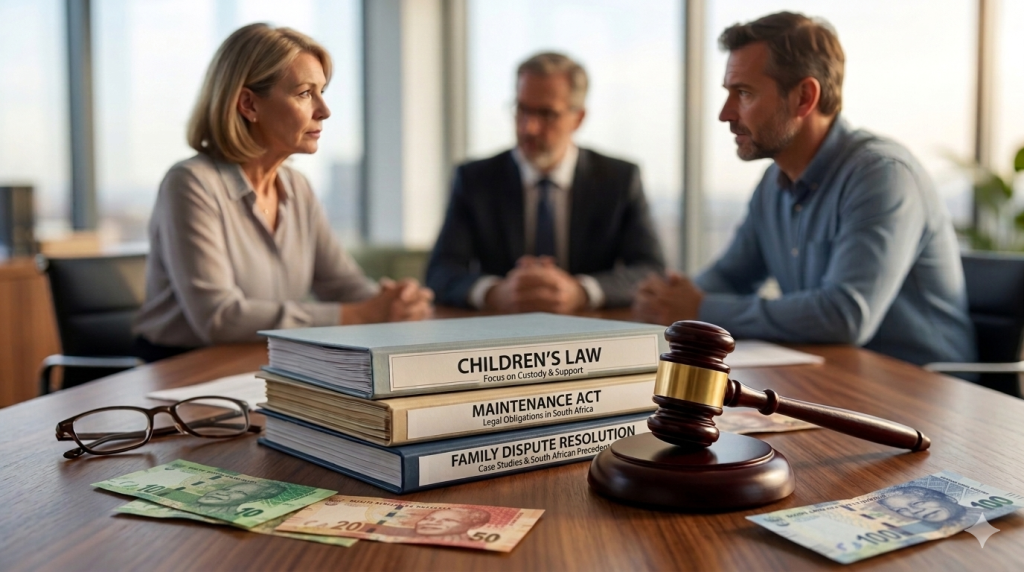
The short answer is yes, but with significant qualifications.
This topic recently trended across social media following a “bombshell” announcement by the National Prosecuting Authority (NPA) regarding maintenance claims between siblings. Public reactions have ranged from disbelief to open hostility, with many questioning the NPA’s authority to comment on civil maintenance matters.
As a litigation attorney specializing in Family Law, I want to clarify the legal reality of sibling maintenance and provide the necessary context.
Maintenance Foundations
To understand sibling maintenance, we must look at the fundamentals. Maintenance obligations are rooted in common law principles as old as time. These were codified in the Maintenance Act 99 of 1998 (amended in 2015). However, the Act does not negate established common law; it works alongside it.
The Maintenance Act applies to the legal duty of any person to maintain any other person, regardless of the nature of their relationship. The Act focuses on the mechanics—Maintenance Courts, investigations, and enforcement. It further deals in more detail with the maintenance obligation between parents and children.
To succeed with a maintenance application, an applicant needs to substantiate the following:
- The existence of a legal duty to support;
- A legitimate financial need on the part of the applicant; and
- That the person from whom maintenance is claimed has the necessary financial means.
Why is the NPA Involved?
Many ask why the NPA is commenting on a civil matter. The answer is simple: Maintenance Officers and investigators are public prosecutors, delegated special powers under the Maintenance Act. While maintenance judgments are civil in nature, the court can impose criminal sanctions—including fines and imprisonment—on those who fail to comply with orders.
The Hierarchy of Maintenance Duties
The common law duty to support does not begin with siblings. There is a strict “hierarchy” of liability based on the closeness of the relationship:
- Parents and Children: Parents hold a joint obligation to support their children from birth until the child becomes self-supportive (not merely until age 18).
- Grandparents: If parents are deceased or incapable of providing support, the duty falls to all living grandparents, jointly and pro rata according to their means.
- Siblings: Only when neither parents nor grandparents can provide support does the legal duty vest with siblings.
How a Claim Against a Sibling Works
A claim is lodged with the Maintenance Court, where a Maintenance Officer investigates the merits. It is important to note that this remedy is primarily intended for minor children who have no one else to care for them.
In the 2024 matter of Sandla v RAF, the court confirmed that the duty to maintain between siblings generally does not extend beyond the age of majority (18), unless there are exceptional circumstances, such as a mental illness or physical disability that prevents the sibling from supporting themselves.
Key Distinction: The duty to maintain between siblings is significantly more limited than the duty between a parent and a child.
The Reciprocal Nature of Maintenance
There is one final “catch”: all maintenance obligations are reciprocal. Just as parents have an obligation to their children, they have a right to claim maintenance from their adult children later in life if they fall into necessity. This same reciprocity applies to grandparents and grandchildren, spouses, and siblings.
Conclusion
The law provides a safety net, not a “free ticket.” Maintenance must be claimed from the closest relative first. The intention behind sibling maintenance is to ensure that children are not left destitute when parents and grandparents are unavailable.
Please note:The information provided above is intended only to offer a basic overview of the topic and does not constitute comprehensive legal advice or a full discussion of all relevant procedures. For more detailed information or personalized advice specific to your situation, please contact us to schedule a consultation.